elligence and Waste: Their Role in Building a Sustainable Future
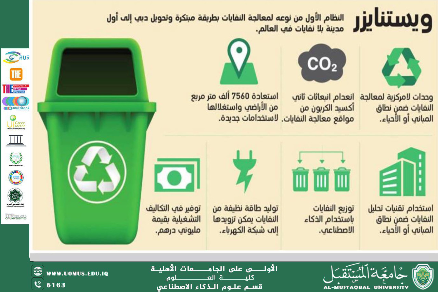
Intelligence and Waste: Their Role in Building a Sustainable Future<br /><br />Waste is one of the greatest environmental challenges facing the world today. With the growing population and rapid industrial development, the amount of waste produced daily has increased significantly. Here, the role of intelligence—whether human or artificial—emerges as a key factor in finding effective solutions for waste management and achieving environmental sustainability.<br /><br /><br /><br />First: Waste – An Escalating Crisis<br /><br />Waste includes solid, organic, electronic, and medical waste, each requiring a different method of treatment. Much of this waste is left in open landfills, which leads to soil, water, and air pollution, in addition to negatively affecting public health.<br /><br /><br /><br />Second: Human Intelligence in Waste Management<br /><br />Since ancient times, humans have used their natural intelligence to reduce the damage caused by waste, through:<br /> • Recycling.<br /> • Turning organic waste into compost.<br /> • Establishing treatment plants for polluted water.<br /><br />However, these efforts are often limited in scale and efficiency, which opened the door to the use of more advanced technologies.<br /><br />Third: Artificial Intelligence and Its Role in Reducing Waste<br /><br />Artificial intelligence (AI) has become an effective tool in waste management. Examples of its use include:<br /> • Automated waste sorting: Using cameras and AI to distinguish between recyclable and non-recyclable materials.<br /> • Predicting waste volumes: Analyzing data to forecast waste amounts in specific areas.<br /> • Optimizing waste collection routes: Reducing fuel consumption and pollution.<br /> • Using robots: For collecting and sorting waste in factories and landfills.<br /><br /><br /><br />Fourth: The Importance of Awareness and Education<br /><br />The issue is not just about technology; it must be accompanied by public awareness, especially among younger generations, about the importance of reducing waste and sorting it at the source. Social intelligence plays a vital role in the success of any technological system.<br /><br /><br /><br />Fifth: Towards a Cleaner Environment Through Intelligence<br /><br />When human intelligence and artificial intelligence come together to face the waste problem, we can reach innovative solutions that protect the environment and reduce costs, such as:<br /> • Smart cities that efficiently manage their waste.<br /> • Eco-friendly factories that reuse their waste.<br /> • Technologies that convert waste into energy.<br /><br /><br /><br /><br />The relationship between intelligence and waste is not complicated—it is a real opportunity to build a sustainable future. Intelligence—whether human or artificial—can be the key to solving one of the greatest environmental problems of our time, as long as it is used wisely and in coordination with both community and government efforts.