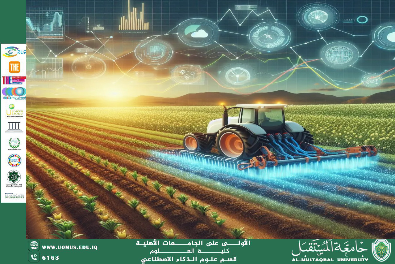
Agriculture and Artificial Intelligence!
Agriculture and Artificial Intelligence<br /><br />The Green Revolution in the Digital Age<br /><br />The agricultural sector has witnessed significant development in recent decades, and with the introduction of Artificial Intelligence (AI), we are now facing a new agricultural revolution known as “smart farming.” This transformation relies on modern technologies to improve crop quality, increase productivity, reduce costs, and preserve the environment.<br /><br />What is Artificial Intelligence in Agriculture?<br /><br />Artificial Intelligence is a branch of computer science that aims to develop systems capable of learning, analyzing, and making intelligent decisions. In agriculture, AI is used to analyze agricultural data, predict weather patterns, detect diseases, and efficiently manage resources.<br /><br />Applications of AI in Agriculture<br /> 1. Precision Agriculture:<br />This approach uses data from soil, weather, and crop sensors along with drones to determine the optimal amount of water and fertilizers needed for each part of the field.<br /> 2. Disease and Pest Detection:<br />AI can analyze images of crops and soil to detect diseases at early stages, reducing losses and increasing the chances of successful treatment.<br /> 3. Agricultural Robotics:<br />Robots are used for tasks such as planting, harvesting, and irrigation, reducing the need for human labor and addressing labor shortages.<br /> 4. Yield Prediction:<br />AI can forecast crop quantity and quality by analyzing historical and real-time data, helping with better planning and marketing.<br /> 5. Water Resource Management:<br />AI helps determine the best times to irrigate and the precise amount of water needed, reducing waste and preserving natural resources.<br /><br />Benefits of AI in Agriculture<br /> • Increased Productivity: By optimizing farming operations.<br /> • Cost Reduction: Through automation and efficient resource use.<br /> • Improved Product Quality: Via continuous monitoring and environmental control.<br /> • Environmental Sustainability: By reducing the use of pesticides, fertilizers, and water.<br /><br />Challenges Facing AI in Agriculture<br /> • High cost of technology.<br /> • The need to train farmers on modern tools.<br /> • Lack of digital infrastructure in some rural areas.